Reduce Food Waste
Through Smart Tracking
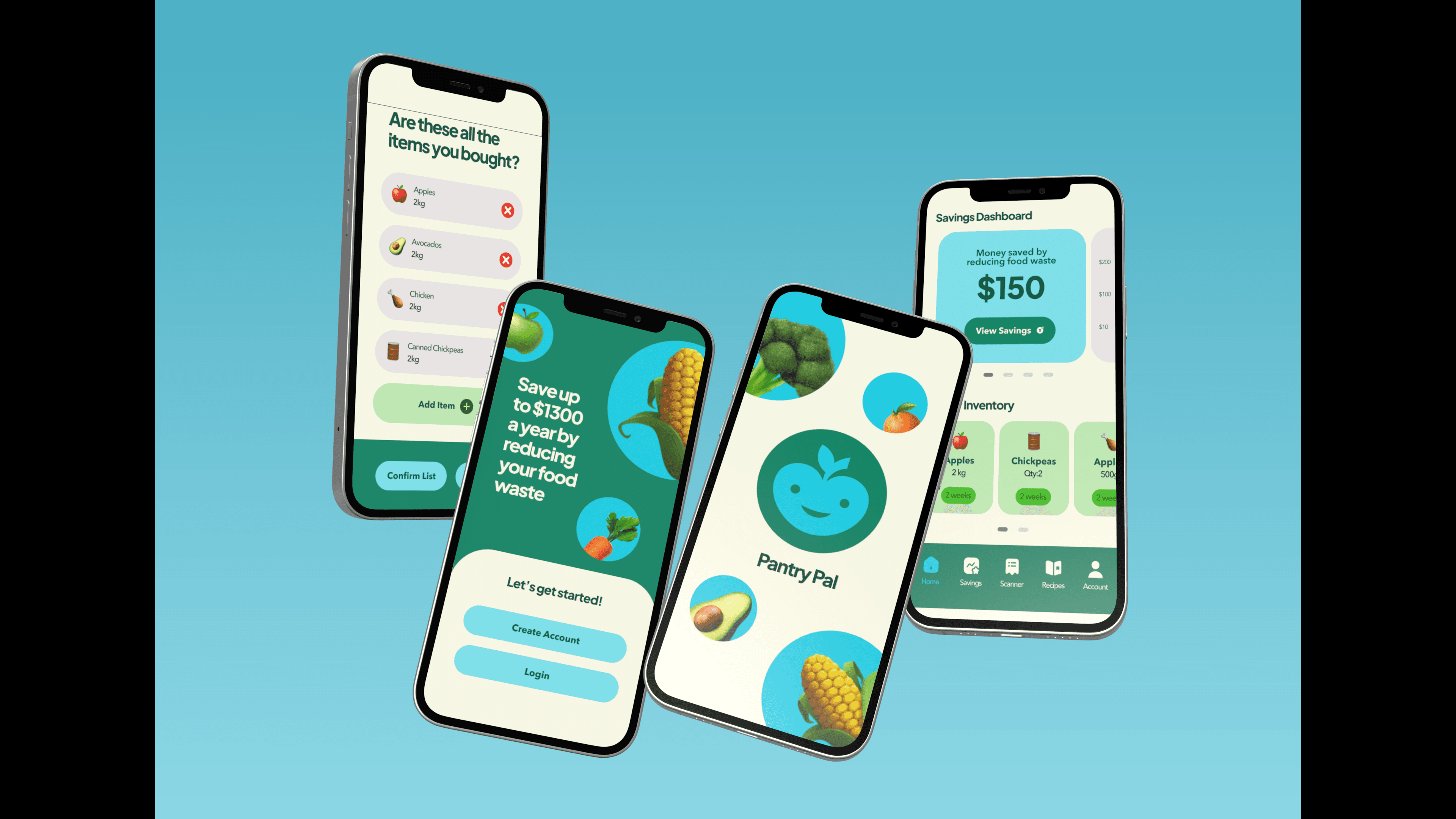
Project Overview
Developed during Bell's 2022 Geekfest Hackathon, this concept won first place in the 48-hour competition. Win resulted in internship offers for the team.
o
The brief: use technology to drive environmentally conscious decisions.
o
Designed to reduce household food waste through inventory visibility, timely reminders, and behaviour-driven purchase insights.
o
I led the visual design and drove the feature scoping for the final deliverable.
Role
UX/UI Design, Visual Design
Tools
Figma, Illustrator, Photoshop
Year
2022
)
The Problem
Scoping Under Pressure
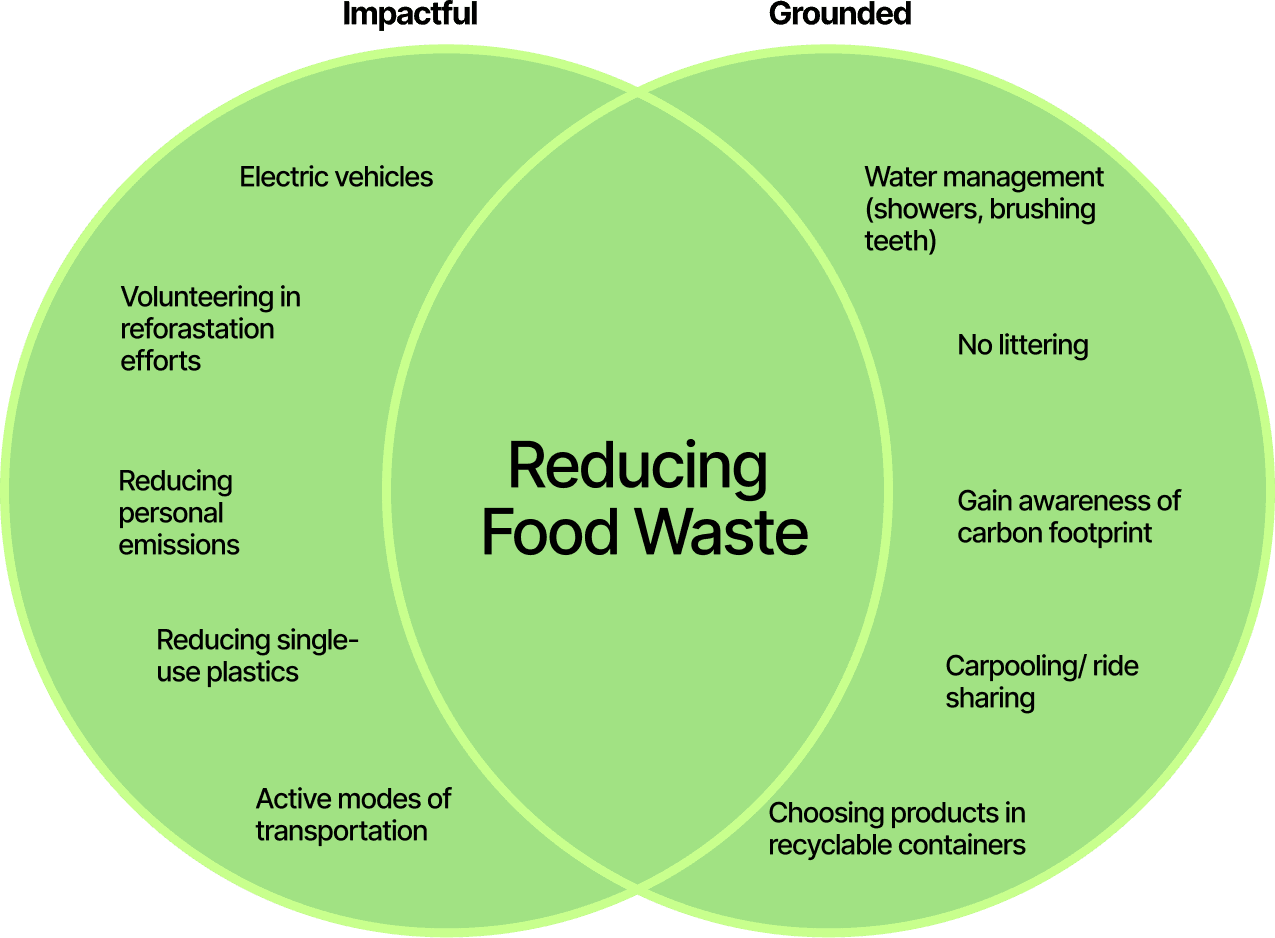
Given the tight deadline our problem space needed to be both impactful and grounded.
}
The Right Problem
Food waste presented an opportunity to influence everyday behaviours rather than tackle larger systemic issues. We focused on young Canadians (18–25), whose challenges with meal planning, time management, and over-purchasing aligned closely with the problem space.
o
Initial Direction
How might we help young Canadians reduce food waste by influencing their everyday behaviours?
}
Problem Space Exploration

Research
To move beyond assumptions, we researched the scale and root causes of food waste in Canada.
}
Driven By Individuals
Nearly half of Canada's 35.5 million tonnes of annual food waste originates at the household level. Individual behaviours like over-purchasing and poor planning are the main drivers.
}
$1300 Per Household
Food waste costs an estimated $1300 per household each year, more than half of food thrown away is still edible.
o
Overlooked Financial Loss
Food waste is driven by small, repeated behaviours like over-purchasing.
At $1300 wasted per household every year, reducing food waste could offer a tangible benefit for young adults on a tight budget.
o
Key User Insight
Food waste is rarely intentional. It results from convenience, lack of planning, and low visibility into what users already have.
User Pain Points
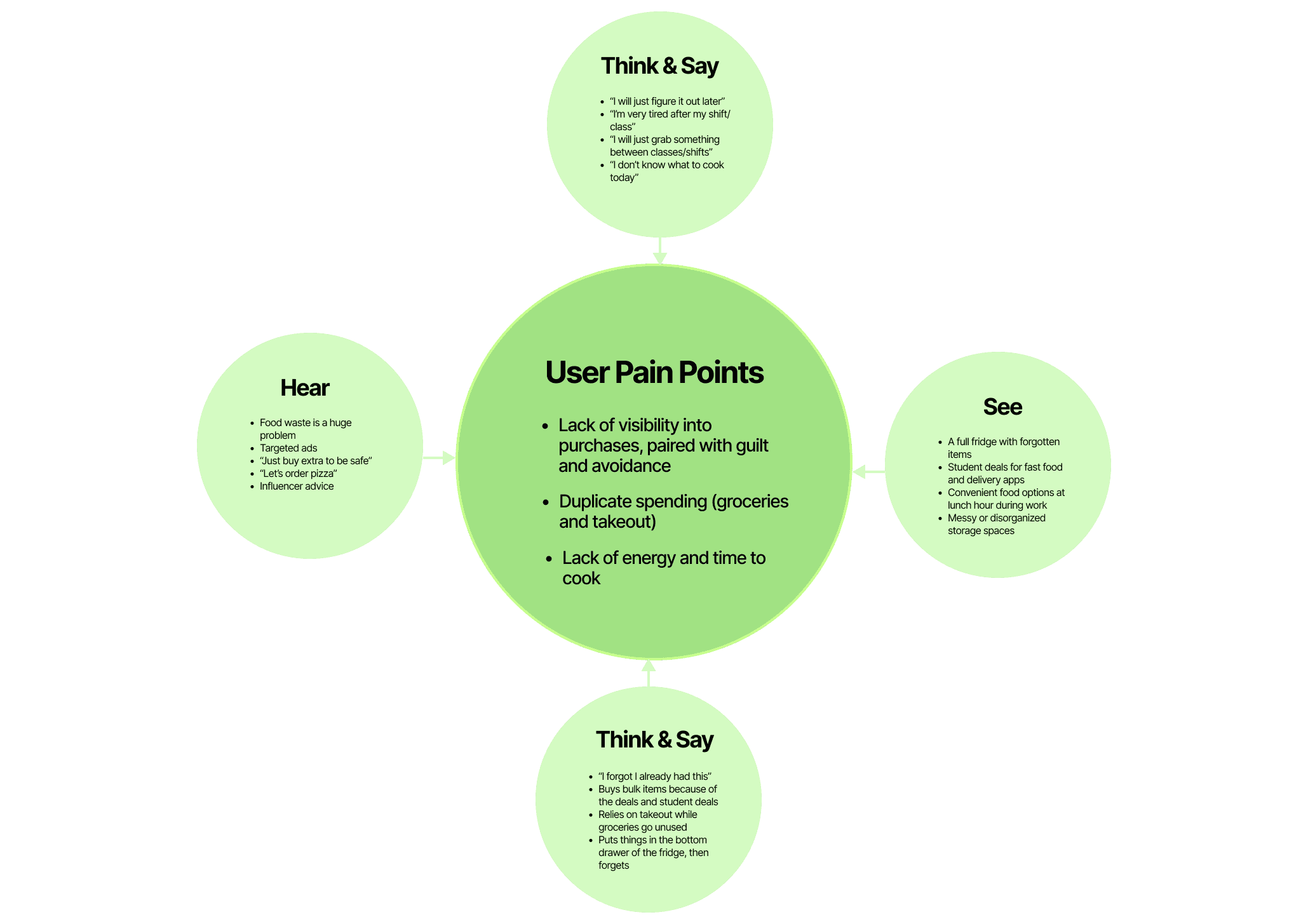
Building on our research and an empathy mapping session, we translated findings into three core pain points:
}
Forgetting Purchased Items
Users lose track of what they already have at home. Out of sight, out of mind, until it's expired.
}
Not Knowing What to Cook
Younger users managing their own meals for the first time often default to takeout rather than using what's in the fridge.
}
Overestimating Purchases
Users buy more than needed “just in case,” increasing the likelihood of waste.
}
Empathy Map
Refined Design Direction
User paint points highlighted one issue: users lacked visibility into what they owned, when it expired, and how to use it. We focused our direction to features that reduced effort and fit naturally into existing routines.
1
Inventory & Expiry Tracking
Users are reminded what they have bought and when it expires, before it's too late to use it.
2
Meal Planning & Item Usage
Personalised meal suggestions based on what's already in the kitchen, accounting for user preferences and lifestyle.
3
Purchase Planning
The app tracks past purchases, reminds the user of what's been wasted, and suggests buying less going forward.
)
The Solution
Wireframing & Iteration
We iterated different versions of the key features, evaluating each idea based on impact and feasibility. We prioritized minimal user effort to ensure adoption within everyday routines:
}
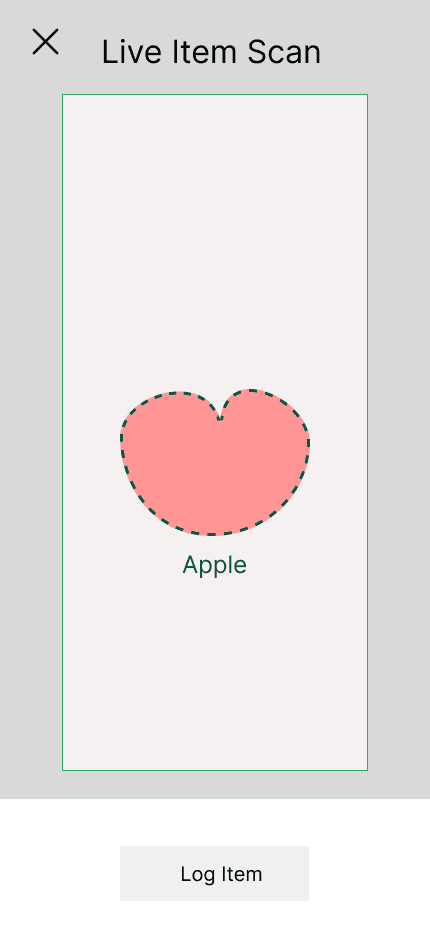
Initial Computer Vision Idea
We explored real-time item scanning with computer vision, but ruled it out because it required multitasking during shopping and risked creating a disruptive user experience.
}
Seasonal & Local Items
Reduced recommendation scope to suggesting which items users should buy less of based on past waste patterns, instead of more complex real-time local alternative suggestions that increased cognitive load.
}
Self Checkout Integration
Considered self-checkout integration, but business limitations, including retailer adoption challenges and technical complexity , made it unfeasible within the timeframe.
o
Pivots & Trade-Offs
At this point my input impacted the direction of the project. I suggested focusing on reducing user effort.
Given the project timeline, reducing scope allowed us to deliver a more polished core experience.
}
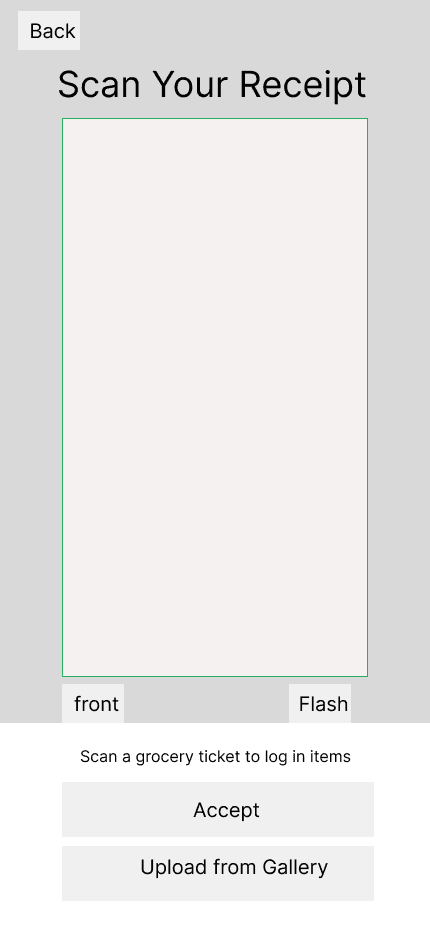
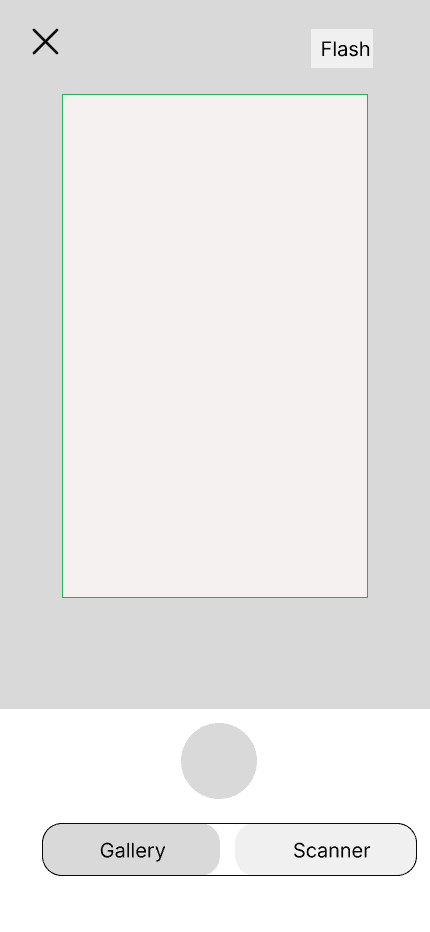
Scan Feature Evolution
}
Wireframes & Final Screens
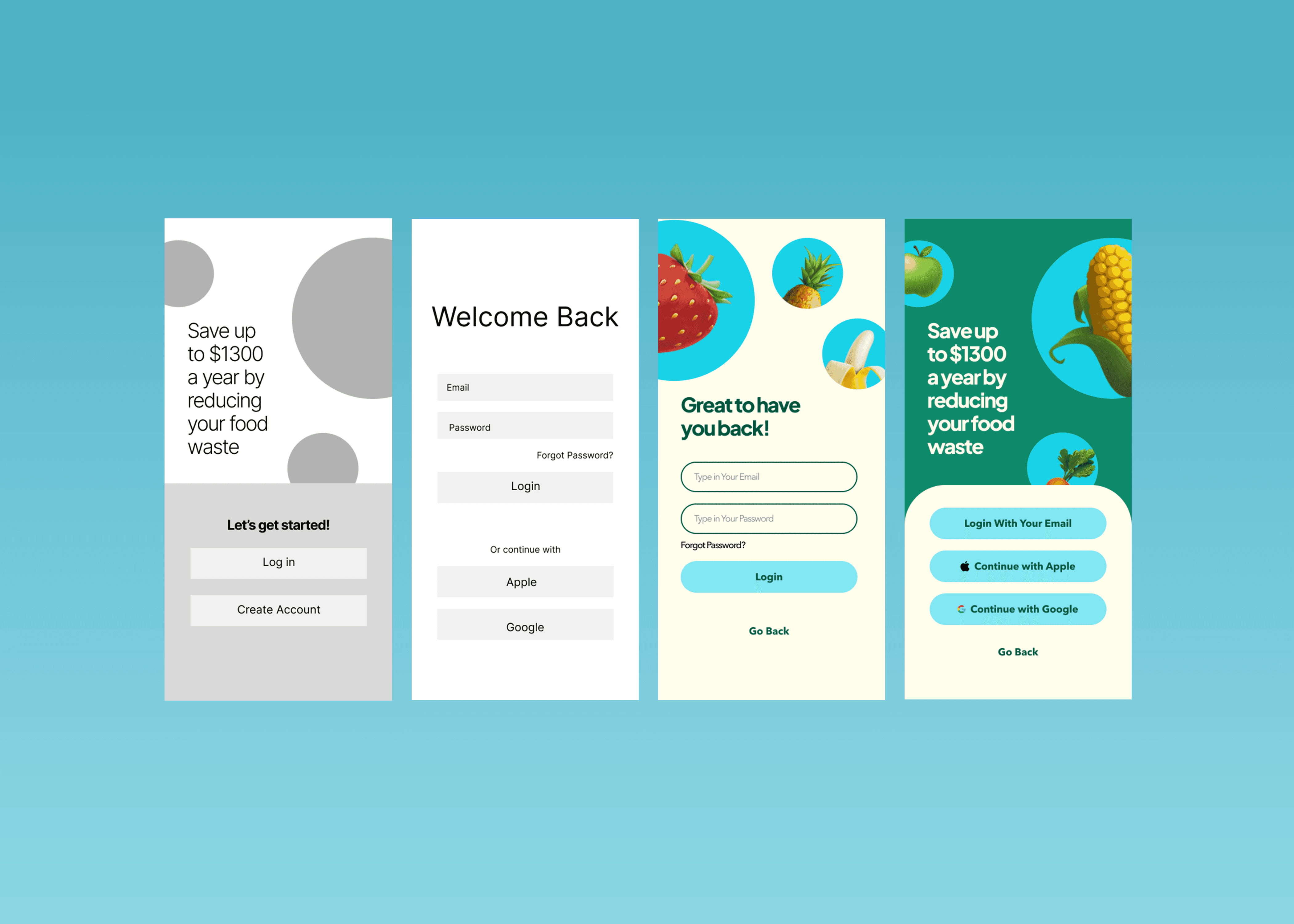
}
Onboarding
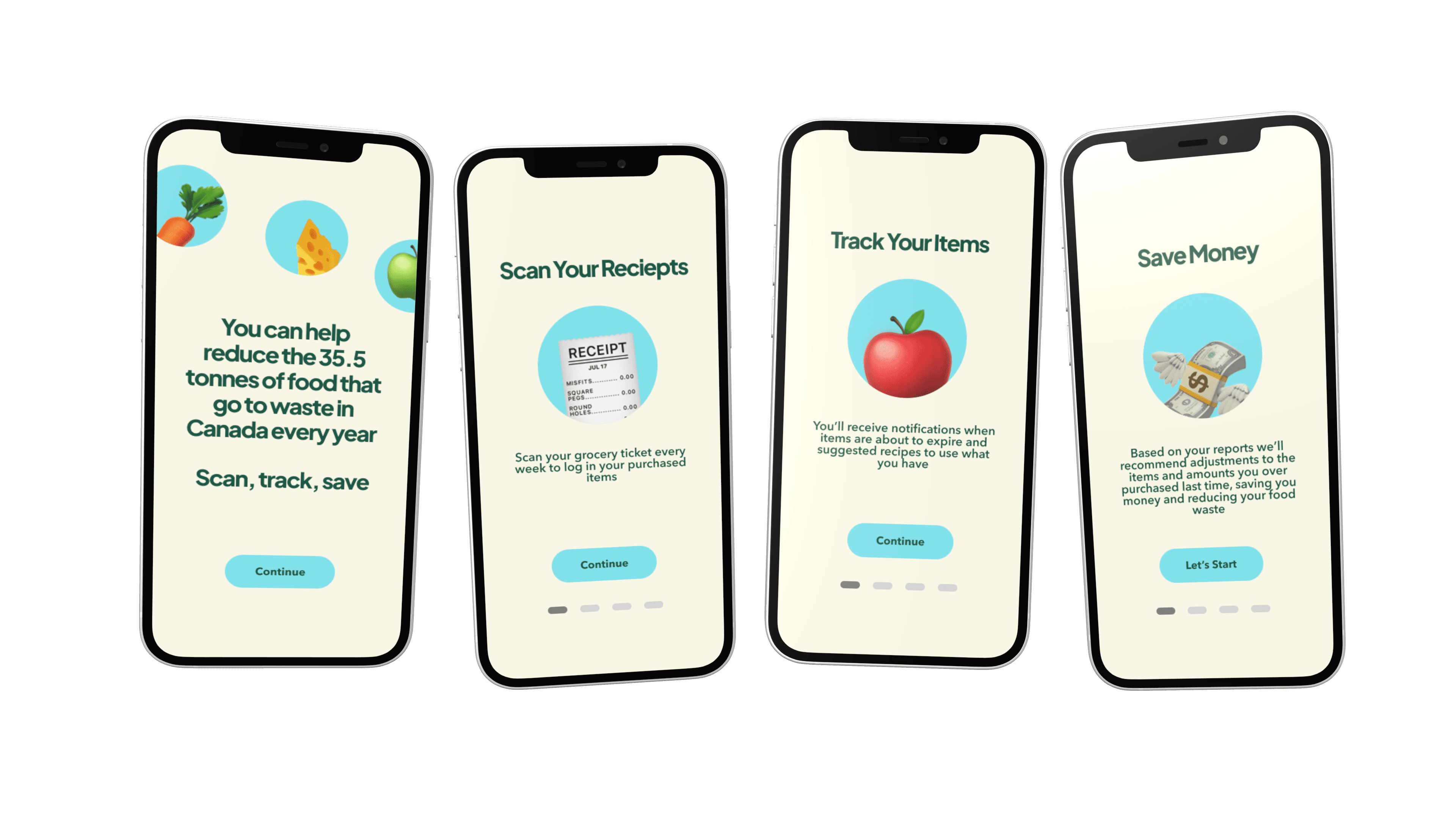
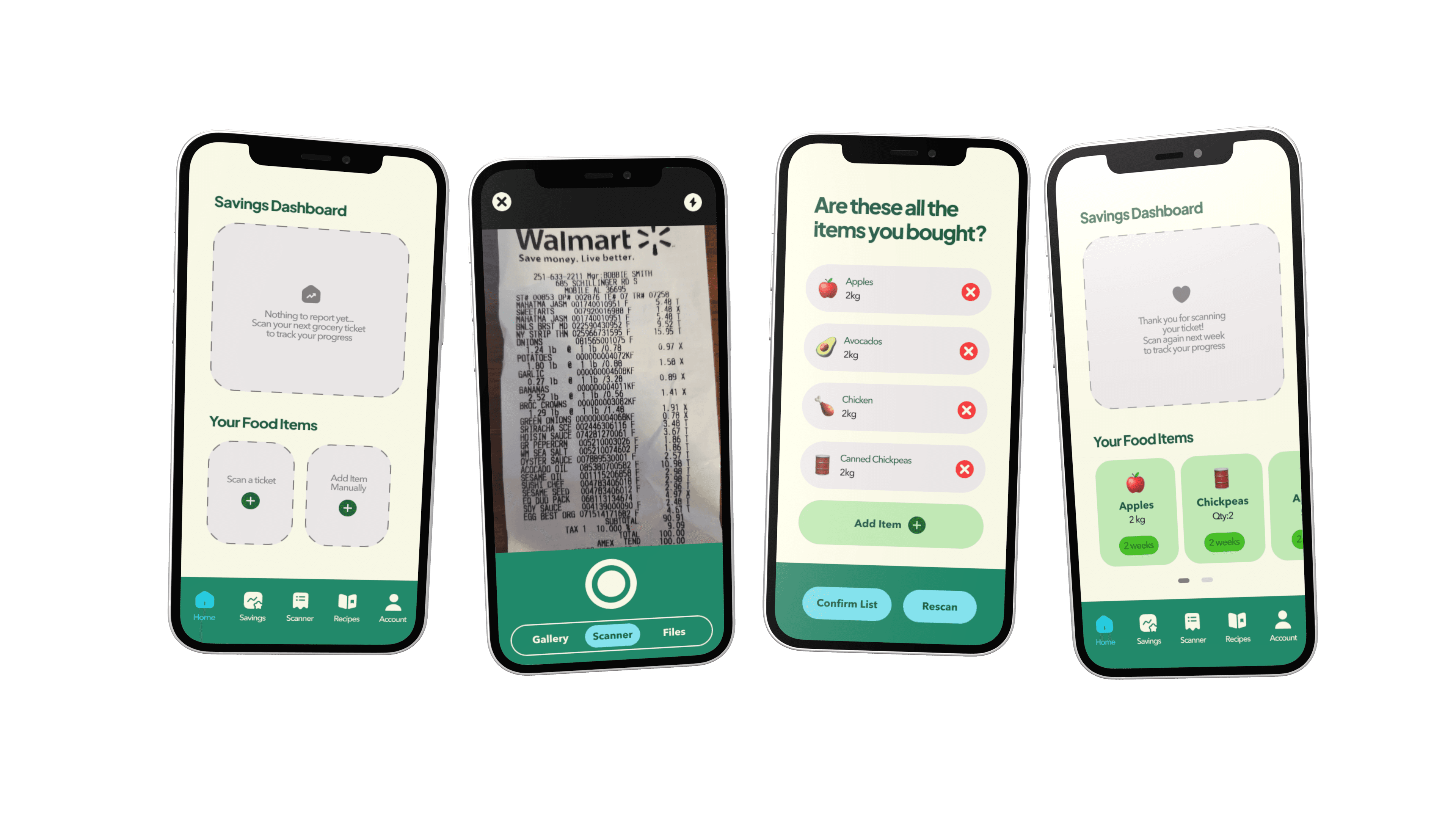
Receipt Scanning & Item Tracking
Receipt scanning allows users to quickly log purchased items and estimate expiry dates with minimal effort.
}
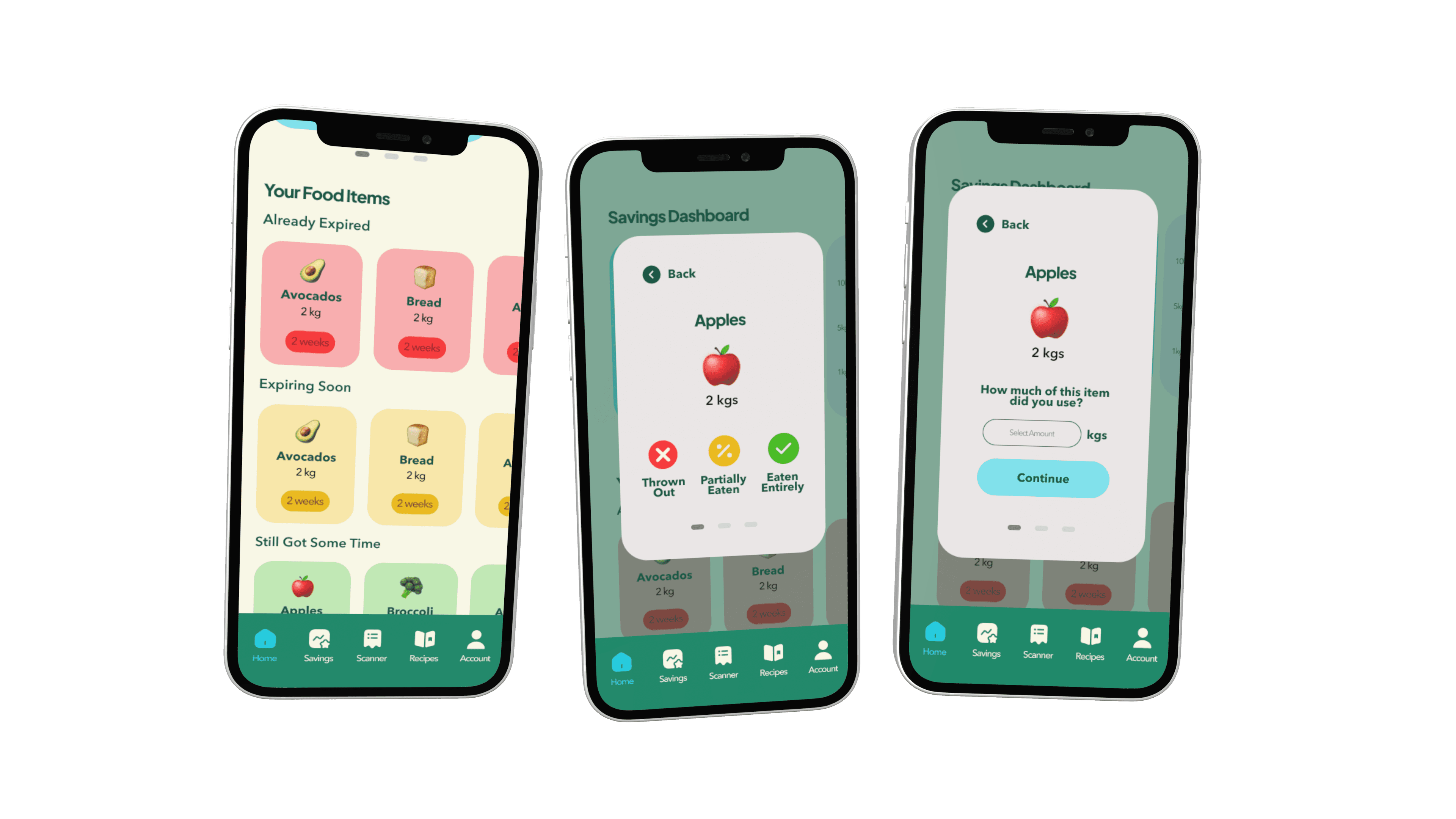
Expiry Reminders
To increase inventory awareness , the app sends expiry reminders for items logged through receipt scanning. Timed around typical shopping days, these reminders encourage users to mark items as used or wasted, helping identify patterns and suggest buying less of frequently wasted items.
o
Core Goal
By making inventory visible and time sensitive, it helps prevent forgotten food and duplicate purchases.
}
First-time Receipt Scanning
}
Item Tracking
Recipe Suggestion
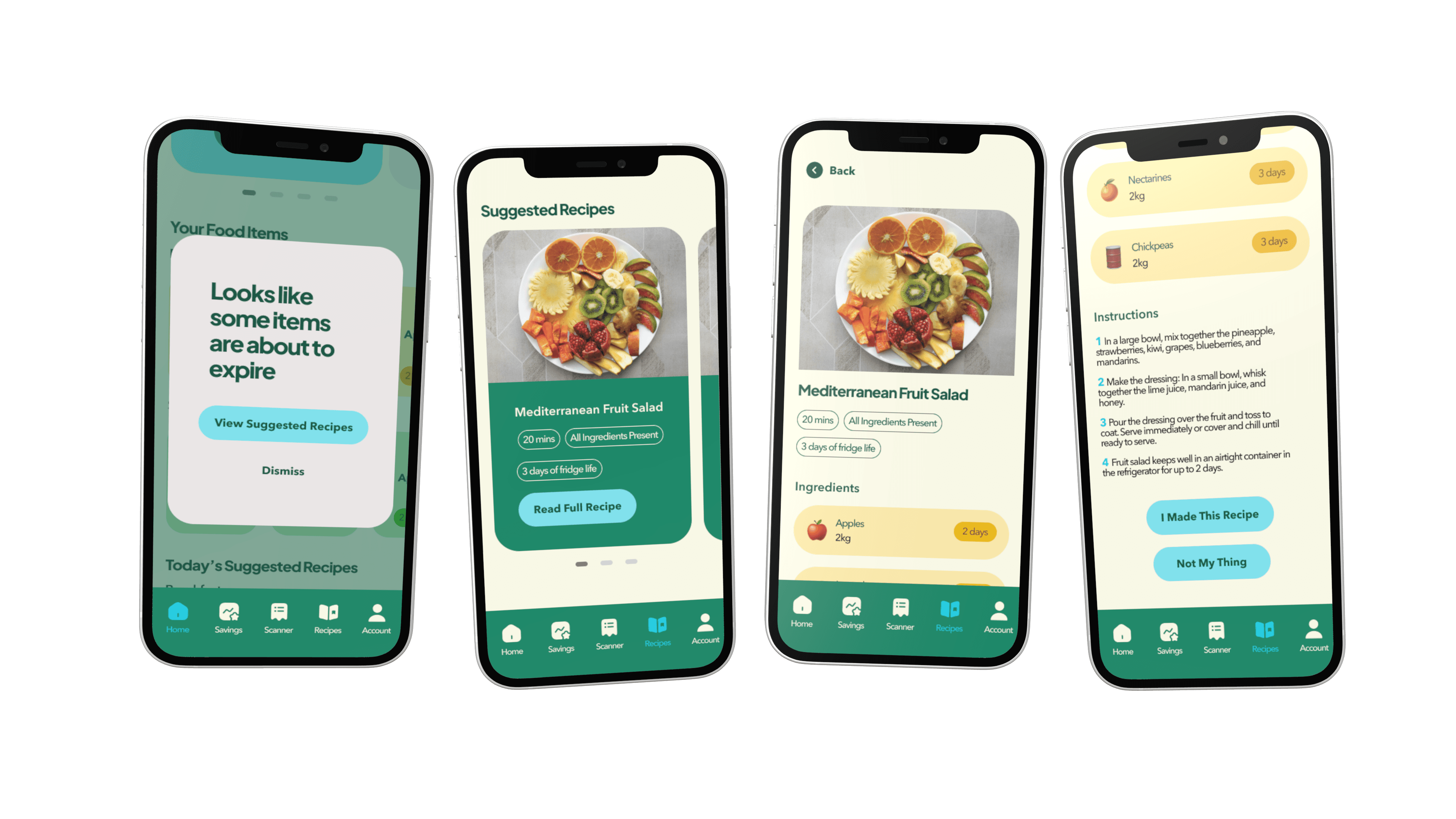
To address uncertainty around what to cook, the app suggests recipes based on items nearing expiry.
}
Use It Before You Lose It
When food is about to expire, users receive notifications with meal ideas using available ingredients.This feature encourages users to turn intent into action.
o
Core Goal
Showing users ways to use items they already have by creating urgency and reducing the mental effort of deciding what to cook.
}
Expiry Alert & Suggestions
User Progress Tracking
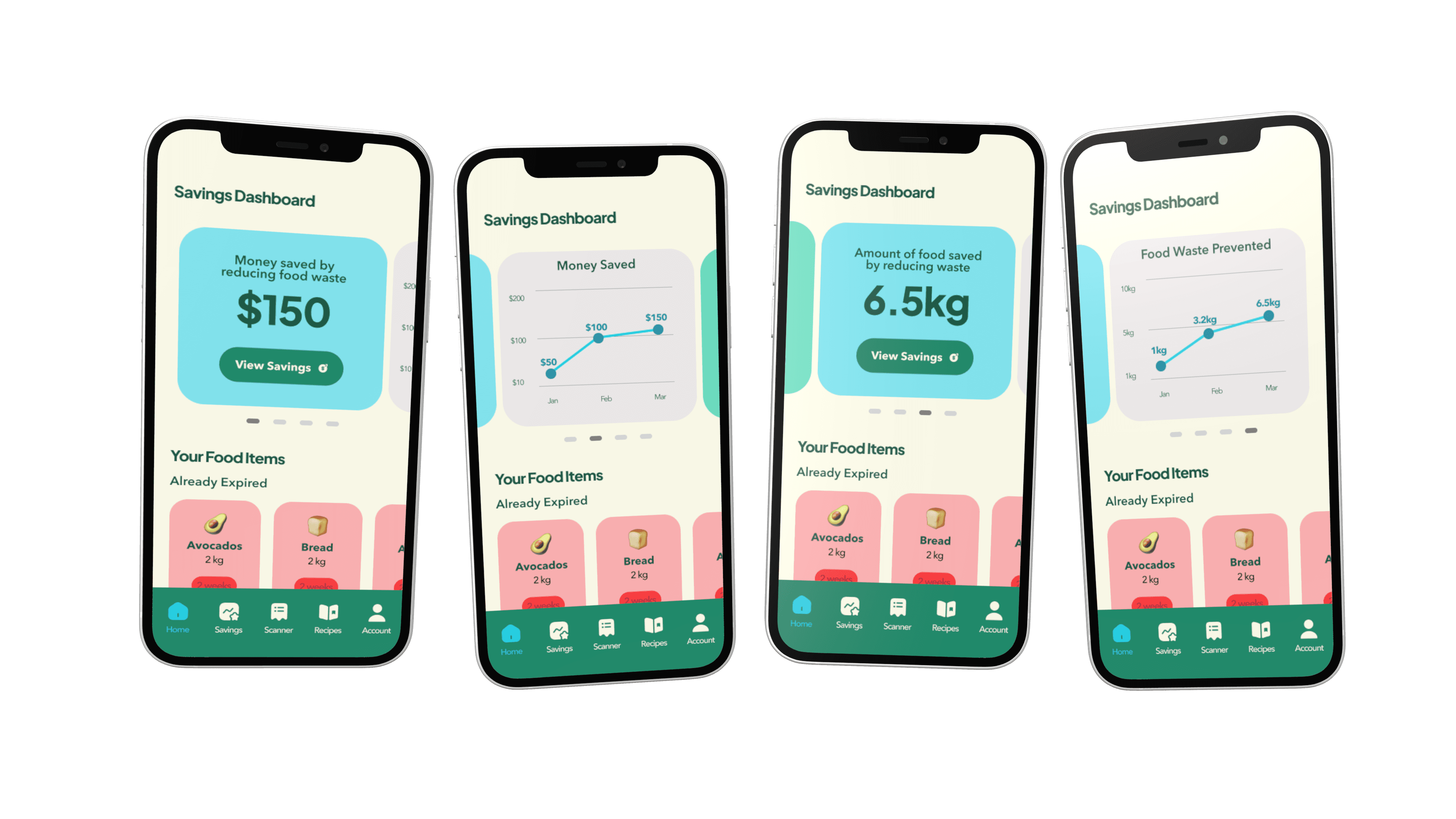
To make impact visible and actionable, the app provides data visualizations showing money saved and food waste prevented.
}
Motivation Framing
Savings are prioritized as the primary metric, as financial incentives are a stronger motivator for behaviour change.
o
Core Goal
Keep users motivated by making the benefits of waste reduction visible and tangible.
}
Progress Metrics
)
Results & Impact
Hackathon Win
Our project was awarded first place in Bell’s 2022 Geekfest Hackathon, competing against over 40 teams from across Canada.
*
Key Takeaway
Clear product framing and feature presentation can communicate value, even if the if the concept hasn't been built yet.
Internship Offer
As a direct result of this achievement, the team received internship offers at Bell.
This provided an opportunity to further develop our skills and learn how real production environments work.
*
Key Takeaway
While this project was completely conceptual, the internship provided an opportunity to see how the principles we used here apply in real-life contexts.
Final Prototype
By increasing visibility into owned food, introducing urgency through expiry tracking, and reducing over purchasing through behavioural insights, the app supports more mindful consumption habits.
*
Key Takeaway
Behaviour change is easier to influence through reducing effort, not adding complexity. Prioritizing visibility, timely reminders, and low-friction interactions created a solution designed to fit naturally into everyday routines.